Showing posts with label fairy tales. Show all posts

Friday, 28 June 2013

Where Stories Come From


No podcast this week. Instead some ponderings about where stories originate.

*****

When I read about other writer’s childhoods, and about how many took refuge in books, the written word, I have such mixed emotions. Jealousy, shame, hunger, loneliness, envy, sadness. Hard, pointy, sharp feelings.

There weren’t many books in my house when I was a child. There were some; two shelves, to be precise, on a small black bookcase at the end of the hallway, between my parents bedroom and the one my sisters and I shared. Most of the bottom shelf was taken up by a set of thin, illustrated encyclopedias that I could never bring myself to read, but I spent many hours studying the pictures of ancient civilizations.


The sentences in most books seemed to be in a language that my anxious mind could not decode. I could read words, but I couldn’t settle into sentences, couldn’t rest in or even access the thoughts and ideas behind stories. Things inside me were churning, but I didn’t know that then. The churning was my normal, so I never named it churning—it just was what I was.


And so when I retreated, found refuge, which I often did, it was not to books; it was to my imagination. I’d fashion tent houses from a thin bedspread flung across the porch and front steps, clipping the blanket to the black wrought-iron railings with clothespins. One particular old cotton bedspread, the kind with little upraised tufts that I’ve since learned is called chenille, was the best. When the sun shone through it, the world underneath blushed warm, glowing peach.

In winter, stuck indoors, I’d wrap big bath towels around my head. Sometimes the towel was long, blonde hair, like Rapunzel (I did have one book of fairy tales, retold in a friendly way “for modern children”); other times the loopy terrycloth was a high steeple Medieval headdress, which I’d seen in a picture and was captivated by. I’d dance in the living room, carefully balancing the heavy towel so it wouldn’t unravel as I waltzed with an imaginary Disney-style prince in front of the TV where figure skaters leapt and spun and sent blue and white flashes onto the walls of my royal ballroom. Outside the big picture window, snowflakes gathered on the blue spruce and dusk fell.

I did not read for pleasure until a few Nancy Drews, Dorothy Parkers and finally Anne of Green Gables came my way. The latter captivated me. Changed me. But the reading habit did not stick. Occasionally, I’d wander the aisles of the local library, which was a long drive from my house, but the French-speaking librarians were unhelpful, even unfriendly (those were the Rene Levesque days in Quebec) and I was overwhelmed by the choices. I had no clue what to touch and what not to touch. It was scary.

There were no bookstores anywhere that I knew of and no money for books if there had been.
So I came very late to books and that is okay, I think, though it has made for a particularly long and difficult journey to this place I am now, where words are finally a refuge of sorts. All along, I have slowly gathered the tools to understand and to express—or strive to, it’s always striving to understand and express—the complexity of human existence, human emotion. Words are my tools to mine that long childhood and beyond it, too.

Beyond it, I say, because what has surprised me in all of this is that when I write, story threads to which I do not remember being exposed emerge from within—the darker myths and fairy tales, the ancient feminine, the magic, the archetypes. They arrive unbidden, which encourages and truly fascinates me. It leads me to trust the unseen, believe that the stories are there, shared among us all, in a Jungian way, in a collective unconscious that is not contained in any one story or book or body. Stories that connect us, frizzing sparks of electrons speeding along a wire suspended. Words that are more than language, but an ancient rumbling of stars in darkness, light from a long way off that’s also within. 

Perhaps you feel it, too? A feeling that starts a little lower than your anatomical heart, rising from that place, rolling through your chest and catching in your throat, then bubbling up in words that you didn’t know you knew.


Imagine that. I do.


Wednesday, 8 May 2013

Podcast Thursday (On Wednesday evening): Philip Pullman


On Philip Pullman’s website he says that he’s not in the message business, he’s in the “‘Once upon a time’ business.” Lucky for us that he is. Pullman’s His Dark Materials trilogy is often preceded by adjectives like best-selling and award-winning, and the books are frequently touted as modern-day classics—deservedly so.

I loved them. I loved Lyra and Pantalaimon; the Gyptians and Serafina Pekkala. When I settled into them, again came that feeling of familiarity, of coming home to the essential story that lies in the heart (not at the heart) of the great myths, folk tales, fairy tales, classics. 

A very Lyra-esque hair style.

Noble Iorek Byrnison?
So this week’s podcast is BBC’s World Book Club’s interview of Pullman.

When I listen to the podcasts I’ve been blogging about, it’s with the ears of an aspiring writer, eager for my favourite authors’ words on craft. I think I’m looking for reassurance, too—I was relieved to hear that even for Pullman, “some names come to you and some names you need to find.” Character naming is going to DRIVE ME CRAZY.

My daemon helping me at work.
Pullman also discusses being a fan of the omniscient narrator and laments that this 19th-century style of storytelling has gone out of fashion.
“I feel the narrator is a sort of sprite, actually, a sort of disembodied spirit that can go from place to place, and this has the advantage of not limiting the storytelling consciousness, the narrating consciousness, to one sex, one age, one anything. The narrator can be simultaneously the old and young, male and female, wise and foolish, innocent and experienced, all these things at once, credulous and skeptical, and so on. I love this freedom, this looseness, this untied-down quality that embodying this narrative voice allows me to have. It gives you such an extraordinary freedom that I’m astonished that more writers don’t do it, but now we have writers limiting themselves to one character and sometimes even to one tense, as if they knew nothing of what was happening beyond right now. This seems to me like building a prison around yourself.”
I’m not sure I know how, as a narrator, one switches between male and female—I have to think about that. If anyone out there can add insight to this idea I’d love to hear it. I do have the three books on the “must-read-again” list, which, I guess, is another adjective for them, and I’ll read with Pullman’s quote in mind.

Have a listen to the podcast. It’s a short interview, but good fun if you’re a Pullman fan.
Completely unrelated to post, but very pretty tulips at dusk.

Monday, 6 May 2013

Snow White

In a land where the people had not seen the sun for months nor felt its warmth, but only shivered behind windows filigreed with frost, spring finally arrived. In one house in one town in this winter-weary land there was a neglected garden where, every springtime, there bloomed a small bunch of pure white tulips. 

Each year they came up, pushing through the hard-packed dirt among common weeds like dandelion and tender shoots of periwinkle and coral bells and bugleweed. 

No one noticed the flowers. Even the squirrels ignored the bulbs, for the old maple that hung over the semi-wild space dropped so many maple keys that, come autumn, the little animals had no trouble growing fat on seeds. Why bother digging, they reasoned, for a few bulbous roots when food lay everywhere all around? 

After a few years, the squirrels forgot about the tulips entirely. As for the villagers, for many generations they never noticed the white blooms. There were so many flowers blooming in bright, exotic colours in the spring - why go into a messy old garden for some dusty white tulips that only reminded them of snow-covered fields and the white ice of frozen cisterns that must be broken every morning for fresh water? If they did notice the tulips, they trembled as if cold and turned away.

On this year, after the especially bitter winter, the dependable tulips bloomed white once again, but with one difference, and this changed everything. 

Exactly one half of one petal of one flower was streaked in bold, blood-red scarlet.****


So. The Nature Muse is busy here this morning. And though the above (and more) was dashed off by me (can I copy right the above? I hereby copy right the above beginning of my short story!! : )) as soon as I uploaded these images, a quick web search for "Snow White" images (not Disney inspired) led me to the art of Marianne Stokes (1855-1927).


What a homecoming.

It is so strange to stumble upon something entirely new and for it to feel so familiar that inside you a voice wells up and says, "Yes, I recognize this. I know this!"


 When I saw this image I knew that the Muse was leading me on an especially fortuitous path this morning - not only did the combination of the red-streaked tulip and this woman's art spark a sweet and simple story that's one part Snow White and one part The Ugly Duckling, but the religious iconography ties into the more challenging, longer piece I'm currently...wrestling with/working on.


How beautiful this woman's paintings are!  


How lush the reds. And the expressions on these women's faces. I could lose myself, which is always a good thing when creating.

But for now, best to keep writing and finish up the short story at least.

Thank you again, Marianne Stokes and Mother Nature!

**** copy right Kathleen Dore.

Sunday, 14 April 2013

Literary Landscapes Part Two

A few posts back I looked at how an admired author's use of setting affected my experience of her novel. Jean Rhys' Wide Sargasso Sea showed me how a little detail goes a long way when it comes to setting. Upon revisiting the novel after many years, I was surprised to discover that she had crafted a truly memorable setting with only a few judicious and evocative details that supported the story. The setting wasn't nearly as central to the story as I had imagined it to be when I first read it —not central, but still essential.

In my work, nature is a jumping off point for setting. My observation of it, my reverence for it, shapes what I'm writing because it shapes my experience of life.

Touching base with nature, letting landscapes enter into me, and then using that new knowledge to re-imagine landscapes for my own made-up universe, that's an essential part of the writing process for me.

Everywhere I go, I search out natural wonders that might inspire and enrich my writing.

On a recent trip to British Columbia, I found fodder for a great fantasy world, for I discovered where the little people live...and the not so little people.

I can tell you, this Green Man took my breath away. Nature did this? Wow! I kept thinking there must be a sculptor hiding nearby. Of course, the sculptor was right in front of me all the time. As soon as I met this guy, I realized how far I could go working tree-lore into my story. Nothing I could make up would be more magical than this fellow in the woods.


This island is enchanted, of course. I'm sure it will fit it to my story. But if not this story, another.

And that is how I move through landscapes. I use the photographs to file away digitally and mentally my literary landscapes. They will surface again when needed, when space in a story opens up and invites them in.


On Vancouver Island I found the archetypal fairy tale bridge. Oh, I was so grateful. Mossy, and ancient—I imagine a zillion different scenes and characters emerging from this landscape.


Here is a very different landscape. I can't tell yet if it will be useful to this story I'm working on now. My young heroine and her friends are on quite a journey, but I'm not sure open ocean or sea coasts will be part of it. I offer the images anyway, to examine how dramatically different landscapes and settings affect mood in a story. That's not news, of course. But it's still good to remind myself to be judicious in adding imagined environments to a piece. I go back to Jean Rhys to learn judiciousness.


The islands of Indian Arm near Vancouver will be in a story one day, I hope. Mystical.


These seals are clearly otherworldly. They were in a harbour when I met them, waiting for fishermen to throw them scraps. I'm told it is their routine to show up just before dusk, as the fishermen clean their catches and toss fish heads and entrails (yummy!). My friends told me that when they lived on one of the smaller Gulf Islands, harbour seals like these joined them for a play in the water. I hope to be so lucky one day!


But the story that I'm consumed with now is one of forests—a huge part of the piece takes place in the gentle, mossy green forests inspired by both cedar groves in Ontario and the amazing rain forests of B.C.

A forest invites you to examine light and dark, bringing to mind the conflict of good and evil, an essential element in folk and fairy tales.

But without the dark, what would this picture be? This picture reminds me that one reveals the other. It is only with both light and dark that the forest's beauty emerges. That's something to think about. 


Forest brooks and springs play a big part in the story. I am taking inspiration from archetypes like the Keeper of the Well.


Groves are key to the story, too. Secretive places with strong energy, they are.


The interdependence of life in a forest ecosystem infuses the story organically, but not necessarily overtly.

I explore how interaction with the forest ecosystem—the reverence we feel if we walk carefully there —can lead to a worshipful relationship with woodland, one that brings certain unexpected gifts to my heroine.


Mysteries are an essential part of the forest. The unknowable. The underground, hidden power of the tree is a great metaphor for the mystery of creation. The tree of life is a powerful motif. It's central to my own life, so it has to be central to this work.


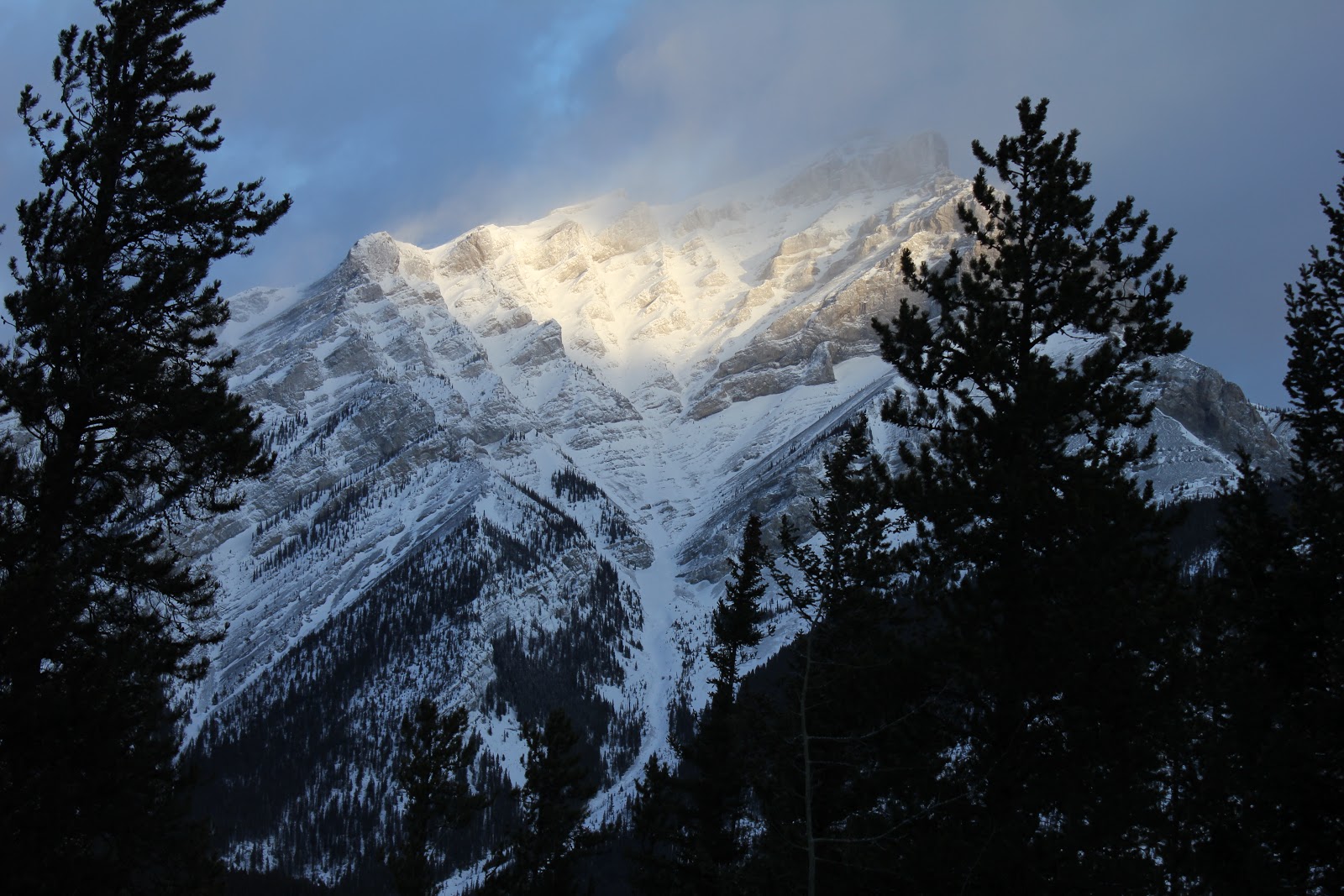
But I'm also interested in the more menacing subalpine woods of the Rockies. The archtypal dark forest.

The first time I travelled to real mountains I was frightened and felt claustrophobic. Why claustrophobic when I was in the midst of what seemed an infinite wilderness?

I think it was the looming nature of mountains and the dark conifers that live there. They really close in upon you.

They evoke awe, where fear and wonder collide and make one feel very small indeed. I will draw on those memories/emotions to test my heroine. She just has to go to the mountains! Adversity abounds in such a setting!

These are some ways that I am piecing together a fantasy world for my characters. This world of ours is rich. I hope I do it justice in my work.


Thursday, 28 February 2013

Winter Hangs On But Not For Long in Narnia

I was in Narnia this morning, but did not stay long. Alas, sledge parking spaces are scarce.


I knew I was not alone. There were tracks in the snow. A deer—somewhere close.


And crows called to each other from atop the bluff.


But the Queen's evil dwarfs were there, too, and in quite a foul mood they were, for the warm air and weighty wet snow were undeniable signs of spring.


The nasty fellows hid in boughs sagging with heavy snow and, in their bitterness, flung great slush-balls at me from their treetop perches. They had surprising accuracy. More than once the cold wet projectiles landed with a shsloop upon my head. The cowards. I could hear them "shouting and cheering as if they'd done something brave."*


I left them, their jeering soon swallowed by the sound of a river racing itself toward a new season. Spring was coming—evident and omnipresent, but still shrouded in white.


"All round them though out of sight, there were streams, chattering, murmuring, bubbling, splashing and even (in the distance) roaring. And his heart gave a great leap (though he hardly knew why) when he realized that the frost was over."*


* From C.S. Lewis's The Lion, The Witch And The Wardrobe.