Monday, 22 April 2013

Perspectives

I went out for a walk early yesterday afternoon (to get fish for dinner) and ended up coming home four or five hours later (just in time to cook said fish). La famille did wonder a bit at that—I should have told  them I'd caught the slippery fellow myself...they might have taken the bait (ahem).

I ended up on a nature trail I'd never been on before, so I was glad to have taken the camera. It's good to know there are still places I've never seen within walking distance.

I was happy to see green finally, but surprised that the shy buds didn't curl up into themselves and hide at the sight of me—so timid the little tendrils have been in this Most Reluctant Spring.

Later, I studied the shots at home and realized that they were more tightly themed than I'd first thought. I found that either pairs of photos or in some cases one photo on its own presented two dramatically different interpretations depending upon perspective. It was the distance that time provided that enabled me to change my perspective.

This tree that's growing horizontally over a ravine, for instance: is this its canopy or roots?


This view is beautiful, but dangerous.


Do pine needles prick or are they soft?


Do the same pictures in black and white change the tree's visual texture?


Is this a troll bridge or a dinosaur carcass or scrap lumber nailed onto a tree long ago fallen?


These flowers were rare bursts of colour in a grey ravine—not much when you stood back and looked at the wider landscape.

But look closely. Already a bee, slow-moving and groggy from winter, is hungrily feasting on pollen—up close we can see the miraculous symbiotic relationship that animates the landscape. Up close, we have new information about the mostly brown and grey "dormant" forest. Going in tight, we gain a new perspective. And what of the bee's perspective? Imagine that!


This is what we do in writing, too—see different perspectives, different points of view. It's essential in bringing characters to life, but it can also make writing difficult. My imagination allows me to see each character in many different ways, to hear their side of the story. Is the archetypal Evil Stepmother really evil? Does she have to be? What made her so? Couldn't she be terribly misunderstood? Or maybe she just is what she is, as a willow tree is not an ash, maple, oak or pine. It's a willow.

Or is it? Perspective and imagination can transform this tree.

When I see a willow, especially in Spring, its boughs are draped in jewels. They are ribbons of gold embroidered with green and pink tourmalines. In even the most gentle breeze they sway seductively, sleepily, and I imagine long-haired water nymphs or ondines rising from dark, weedy pools to tempt mortal men into marriage and thereby gain souls.

Undine by John William Waterhouse.
From http://en.wikipedia.org/wiki/Naiad


The Rhinemaidens by Arthur Rackham.
From http://en.wikipedia.org/wiki/File:DieRheintöchter.jpg


Rhinemaidens Warn Seigfried by Alan Rackham.
From: http://en.wikipedia.org/wiki/Arthur_Rackham
And that, I am EXCITED to say, has given me a clue into a particular character and into the plot itself of my story. Perspective and time has given me insight into something that has puzzled me for the last few days. Perspective, time, and the generosity of the Nature Muse to bestow, once again, the gift of inspiration to the writer who was feeling a tad confused before she went out to the forest to get a fish.

           I'm very grateful. 
Happy Earth Day, sweet planet. 


Sunday, 14 April 2013

Literary Landscapes Part Two

A few posts back I looked at how an admired author's use of setting affected my experience of her novel. Jean Rhys' Wide Sargasso Sea showed me how a little detail goes a long way when it comes to setting. Upon revisiting the novel after many years, I was surprised to discover that she had crafted a truly memorable setting with only a few judicious and evocative details that supported the story. The setting wasn't nearly as central to the story as I had imagined it to be when I first read it —not central, but still essential.

In my work, nature is a jumping off point for setting. My observation of it, my reverence for it, shapes what I'm writing because it shapes my experience of life.

Touching base with nature, letting landscapes enter into me, and then using that new knowledge to re-imagine landscapes for my own made-up universe, that's an essential part of the writing process for me.

Everywhere I go, I search out natural wonders that might inspire and enrich my writing.

On a recent trip to British Columbia, I found fodder for a great fantasy world, for I discovered where the little people live...and the not so little people.

I can tell you, this Green Man took my breath away. Nature did this? Wow! I kept thinking there must be a sculptor hiding nearby. Of course, the sculptor was right in front of me all the time. As soon as I met this guy, I realized how far I could go working tree-lore into my story. Nothing I could make up would be more magical than this fellow in the woods.


This island is enchanted, of course. I'm sure it will fit it to my story. But if not this story, another.

And that is how I move through landscapes. I use the photographs to file away digitally and mentally my literary landscapes. They will surface again when needed, when space in a story opens up and invites them in.


On Vancouver Island I found the archetypal fairy tale bridge. Oh, I was so grateful. Mossy, and ancient—I imagine a zillion different scenes and characters emerging from this landscape.


Here is a very different landscape. I can't tell yet if it will be useful to this story I'm working on now. My young heroine and her friends are on quite a journey, but I'm not sure open ocean or sea coasts will be part of it. I offer the images anyway, to examine how dramatically different landscapes and settings affect mood in a story. That's not news, of course. But it's still good to remind myself to be judicious in adding imagined environments to a piece. I go back to Jean Rhys to learn judiciousness.


The islands of Indian Arm near Vancouver will be in a story one day, I hope. Mystical.


These seals are clearly otherworldly. They were in a harbour when I met them, waiting for fishermen to throw them scraps. I'm told it is their routine to show up just before dusk, as the fishermen clean their catches and toss fish heads and entrails (yummy!). My friends told me that when they lived on one of the smaller Gulf Islands, harbour seals like these joined them for a play in the water. I hope to be so lucky one day!


But the story that I'm consumed with now is one of forests—a huge part of the piece takes place in the gentle, mossy green forests inspired by both cedar groves in Ontario and the amazing rain forests of B.C.

A forest invites you to examine light and dark, bringing to mind the conflict of good and evil, an essential element in folk and fairy tales.

But without the dark, what would this picture be? This picture reminds me that one reveals the other. It is only with both light and dark that the forest's beauty emerges. That's something to think about. 


Forest brooks and springs play a big part in the story. I am taking inspiration from archetypes like the Keeper of the Well.


Groves are key to the story, too. Secretive places with strong energy, they are.


The interdependence of life in a forest ecosystem infuses the story organically, but not necessarily overtly.

I explore how interaction with the forest ecosystem—the reverence we feel if we walk carefully there —can lead to a worshipful relationship with woodland, one that brings certain unexpected gifts to my heroine.


Mysteries are an essential part of the forest. The unknowable. The underground, hidden power of the tree is a great metaphor for the mystery of creation. The tree of life is a powerful motif. It's central to my own life, so it has to be central to this work.


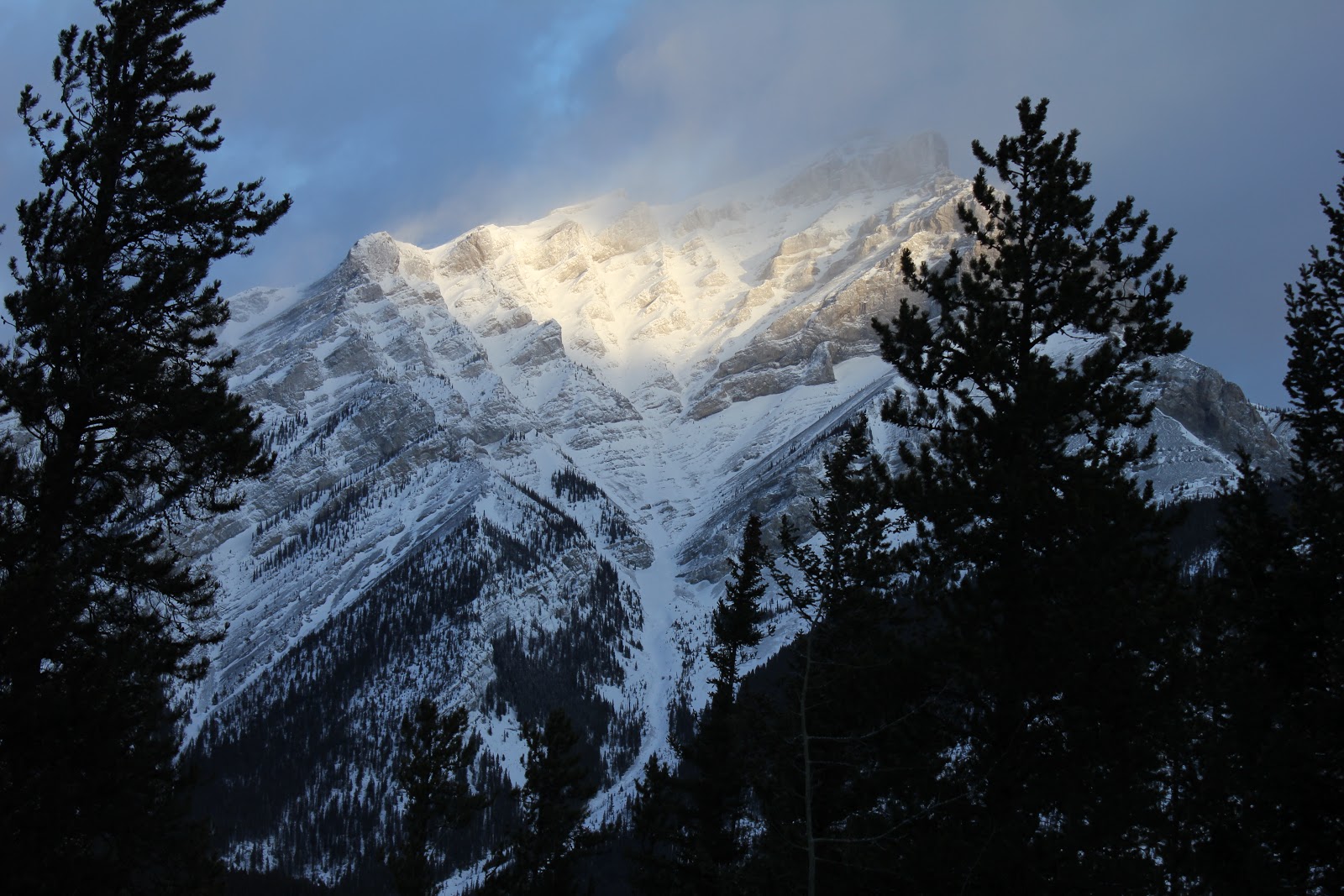
But I'm also interested in the more menacing subalpine woods of the Rockies. The archtypal dark forest.

The first time I travelled to real mountains I was frightened and felt claustrophobic. Why claustrophobic when I was in the midst of what seemed an infinite wilderness?

I think it was the looming nature of mountains and the dark conifers that live there. They really close in upon you.

They evoke awe, where fear and wonder collide and make one feel very small indeed. I will draw on those memories/emotions to test my heroine. She just has to go to the mountains! Adversity abounds in such a setting!

These are some ways that I am piecing together a fantasy world for my characters. This world of ours is rich. I hope I do it justice in my work.


Thursday, 11 April 2013

Hope

I refuse to show you what it looks like outside my window today. I refuse to look. Okay, I just peeked. It is white and wet. They are calling for freezing rain by the afternoon commute. They did not call for snow, but that is what is falling and ACCUMULATING right now.

Being Canadian, I love to moan about the weather, no matter what it's doing. This Eeyore-like approach to meteorological conditions is a defense mechanism, of course. It helps me bear up under the heavy weight of disappointment. Expecting the worst weather-wise means never being crushed when it snows in April.


But I'm changing, I think. I'm hoping more, which is why I'm peppering this post with pictures that I took a few years ago on a garden tour on magical Ward's and Algonquin Islands. (Find out more about the Toronto Islands here. )


Just to look at these pictures in the midst of an April snowstorm feels like a defiant act of hope.

*****

So, what is all this about personal transformation and hope?

It began when my indoor cat escaped and was lost. I was desperate to find him, and I walked the neighbourhood calling and calling his name (and delivering hundreds of fliers). As I walked and called, I felt how hard it was to hope for something that seemed hopeless. This neighbourhood is a dramatic intersection between built and wild environments. Ravines filled with coyotes, foxes, raccoons and peregrine falcons carve through the landscape, as does a busy six-lane highway lined with strip malls and questionable motels.

Hoping that my pampered indoor feline survived his first foray into the Big Wide World took guts. I felt brave as I called his name. I felt faithful. I knew the odds were miserable, and that's what made my act of hope so poignantly courageous.


As I thought about this partnership between hope and bravery, I realized it applied to so many acts.

*****

Gardening is an act of hope. Who can plant a tree without hope? It is impossible! Who can dig with her hands and not feel hope for the cool dirt that is our Earth? Such an act of bravery and hope it is to plant and tend and love a garden.

And here is another aspect of the nature of hope.

What gave me the strength to keep calling for Jet, releasing his name into the quiet mornings on streets still sleeping? After all, I did not know if he was close by, miles away, dead or just alone and terrified in some dark, close hiding space.

It was love that kept me calling. Hope springs forth from love.

Losing Jet showed me that hoping is not a foolish, empty act, but one requiring great courage. Hoping to make the world better—through gardening, easing a lost pet's suffering, writing a letter to the government about gun control, praying for an abused child unknown to you who is alone somewhere out there in the world—these are acts of immense bravery, not pointless petitions to an uncaring universe.


*****

I'll add one more act of bravery to the list. Writing fiction. Writing your first work of fiction, with no guarantee it will see the light of day as a published piece, doing it anyway because you have a story to tell and only you can tell it—that's brave.


And audacious. 


And hopeful!


*****

So that is how things have changed in my world. I know more deeply that I simply must do what calls to me, and do it bravely, hopefully and with love. It's so very hard to hope without any guarantee that the suffering of innocents will cease, that the cat will be found, that spring will come, that the Earth will survive humanity, that our words will one day live beyond our hard drive...


...but you just have to do it anyway. Hope for more. Act with love. 


That is something—no, that's everything.


*****


P.S. Someone found our cat hiding under their deck,
recognized him from the flier and returned him to us! We are so fortunate!
And I'm still writing.


Wednesday, 3 April 2013

Another Day

I'm calling this one "After the Hockey Game." Perhaps I'll start a series called My Life: Parked.

Although when I saw this scene last night I felt very happy to be alive, I am thinking now about the family at my son's school who lost their son on Good Friday in a tragic car accident. He was in grade 11. A child embarking on manhood, never to arrive there.

I can only imagine what great pain it must be to look at a sky like this through his mother's eyes. To know your son isn't here to see it. To know you cannot share it with him or enjoy it without him.

So this is for her. I don't know her, she won't ever see this, but I send this to her as a prayer. I think what I can hope for her is this:
May one day your sorrow be lessened so that beauty is no longer too painful to behold.


Saturday, 23 March 2013

Here and Now

I have been thinking so much about the here and now. These days, we are reminded so often to be present, mindful, in the now.

I meditate, not as often as I should, but I do. And the method I learned is a mindfulness one, a Buddhist meditation, so it is very much about the now.

Often, though, in my daily life, I find myself wishing I lived somewhere else than in this city of mine, or any city. I know I am most at home where the land and sky meet at the horizon, uninterrupted by strip malls and skyscrapers.

Then this happens.


Poetry, here and now. The mundane and majestic side-by-side.

And isn't this just like life on this planet? Oh yes, we compromise. This parking lot is my compromise, I can tell you. But here, in this moment, the neon signs are eclipsed by far brighter light, one that shows me the way, time and again, calling me with such patience and persistence to that which is beyond the endless asphalt.

I see now my pursuit of this deep love is my ultimate quest, and I need to be more fearless in the chase.

But for right now, until I find the road I'm looking for, I've got a great parking spot.


Tuesday, 5 March 2013

Gifts of Art


A post bemoaning winter was well underway. I'd gathered my glowering thoughts about the season —the gloomy monochrome landscape, the grey days piling up in my memory like the mountains of frozen slush lining the streets, the crunched-up bodies of the city folk huddled under their coats, heads down to chests as they trudge through another day.

My eyes felt parched; they were so thirsty for colour. I'd decided enough was enough. I would post some cheery pictures of a garden tour I took on Toronto’s Ward’s Island a couple of summers ago.


But wait a minute, I thought. Wasn’t it less than a month ago that I posted passionately on the beauty of  frost? Didn't I celebrate blue-shadowed trees on fields of gold-kissed snow? What happened? When did I fall so completely out of love with winter?

I guess a love like that cannot last. It’s doomed by the inevitability of spring.


I didn't finish the post. It will appear later. Instead I happened to drive by a house where winter is still welcome. On its front lawn is a gallery of snow art.  
A polar bear mama, arms out to her cubs.


A human mother with little ones clinging to her skirts.


A goofy, funny, playful dog sitting, waiting for a treat, and...a deer? A sphinx cat? I’m not sure what the last one is, but I am grateful for it.


The city is still drained of the soft green I'm yearning, but I can't deny I love the virtues of snow—it can bring out the best in us. It brings out a playfulness in young and old.

I love that this artist has shared his vision and brought magic to a somewhat bleak street-scape. (I know he's a he, because I saw him on my last drive by. I was showing my elderly mother the creations, and the sculptor himself was touching up his work — a little pat of fresh snow here and there. We stopped to compliment him. He speaks little English, and seemed surprised by our appreciation, but he waved and nodded shyly.) 

I hope he knows how grateful I am that he shares his art with the city. I felt he seemed the type that makes art because he must—art for the joy of creation, art even though it cannot possibly last for long, art for art’s sake, but also art for our sake, too.

So I will settle back into the now that is in snow. The garden will come. It always does.

Until then I will carry on making steaming mugs of hot chocolate, lighting the kitchen candles at dusk, and looking for the gifts that are in front of me instead of pining for the ones that don't exist yet.